The Case for a Slightly Feral Front Garden in 2026
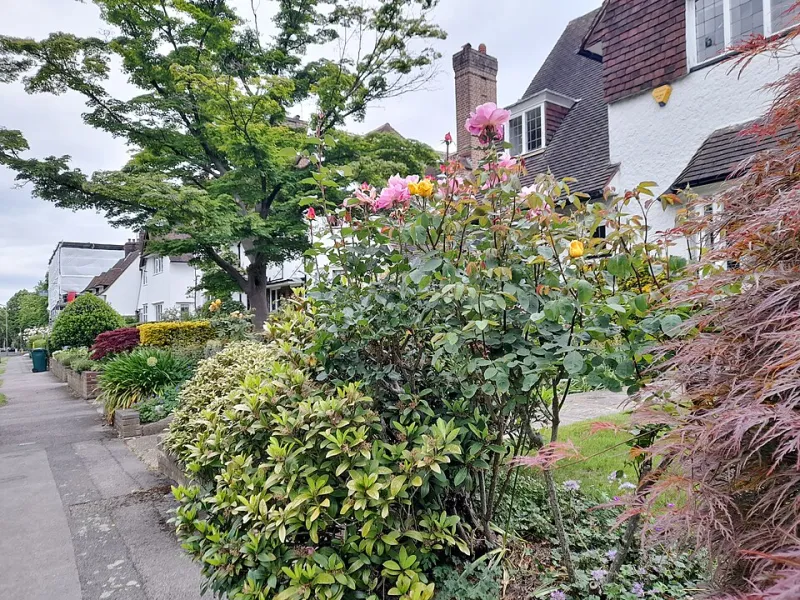
Photo: David Howard , CC BY-SA 2.0, via Wikimedia Commons
Here is a confession: the phrase low-maintenance front garden makes me nervous. In 2026 it usually means gravel, a strip of weed membrane and three pots of something clipped. It is tidy, it is easy, and it has almost nothing to do with the cottage-garden look so many of us say we love. The front garden is the part of the house that speaks to the street. When it is reduced to a car park or a patch of stone, we lose the chance to make that first sentence interesting.
The tidy front garden is not neutral
Neatness is a choice, and it is not a neutral one. A close-mown lawn, a gravel border and a trimmed shrub may look orderly, but they offer very little to insects, birds or the soil beneath. The cottage garden has always been a bit unruly. It is a place of self-seeding flowers, climbing roses over doorways and herbs spilling onto paths. We admire that look in photographs, then often strip it out of our own front gardens because we are worried about what the neighbours will think.
That worry is understandable. Front gardens are public in a way back gardens are not. They are judged from the pavement, discussed over fences and sometimes policed by deeds, tenancies and council rules. But the answer is not to make them anonymous. It is to make them wilder with intent.
What intentional wildness looks like
A messy front garden does not mean abandoning it. It means editing for wildlife and winter interest rather than for a blunt tidiness. Leave seed heads standing: teasel, fennel, echinacea and rudbeckia feed birds and catch frost. Swap a gravel strip for a native hedge of hawthorn, hazel or holly, or use yew if you want something clippable and evergreen. Let a climber cover the bin store instead of hiding it behind a fence. Honeysuckle, climbing rose and ivy all do the job, and they soften the awkward bits of street furniture that no one wants to look at.
Keep a clipped path and a clear gate. That sounds small, but it changes how the whole garden reads. A crisp edge tells people the wildness is a decision, not neglect. In a small plot, scale the idea down: a container of fennel, a window box of native wildflowers, a single seed head left standing by the door. You do not need a meadow to make the point.
The awkward bits: neighbours, councils and small plots
Neighbours are the practical heart of this. Talk to them early, especially if you are changing a front garden that has been neat for years. Explain what you are doing and why, and listen if there is a genuine problem with sightlines, access or drainage. A hedge that blocks a pavement or hides a drive is not a biodiversity triumph; it is a nuisance. Keep the structure low enough to see over, and do not let self-seeders colonise the neighbour's side of the boundary.
Check the rules before you dig. Some properties have covenants about front gardens, and renters need to look at their tenancy. Councils may have something to say about hardstanding, hedges, conservation areas or plants that obscure the highway. None of that means you cannot do anything. It means you should know what you are working within.
Small plots need more discipline, not less. A tiny front garden can easily look scruffy rather than gently wild. Use repeat planting, keep one strong evergreen shape, and cut back the plants that flop over the path. The most radical thing you can do in 2026 is not to let everything go. It is to let the front garden be a living thing while still being a good neighbour.
The radical bit
Radical does not have to mean ragged. A slightly feral front garden is a quiet kind of courage: a refusal to treat the space as a car park, a bin store or a show home. It says that the street can have seed heads and scent, that a hedge can be a habitat, and that a cottage garden can begin before you reach the front door. In a year when so much of life feels pared back and paved over, that is worth a little awkwardness.