A Line With a View: Giving the Rotary Airer a Proper Place
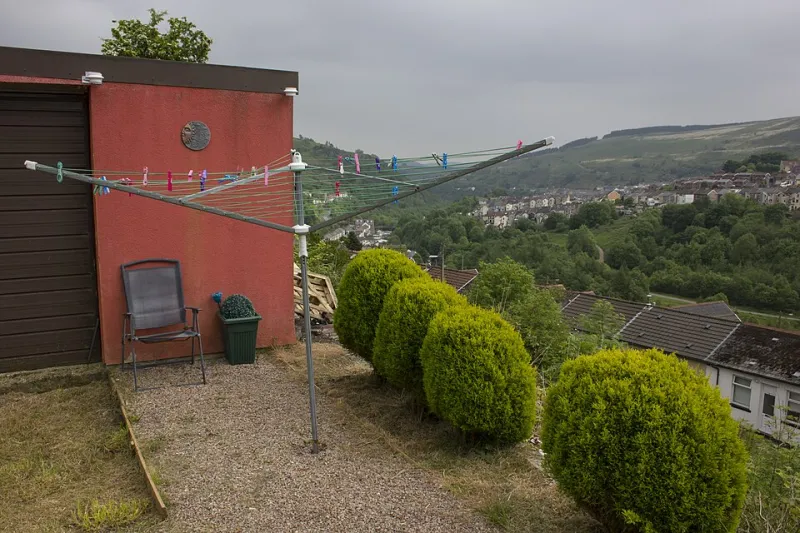
Photo: Jeremy Segrott from Cardiff, Wales, UK, CC BY 2.0, via Wikimedia Commons
There is a moment in every small garden when the washing line stops being invisible. Maybe it is June, and a white sheet is snapping in the breeze like a sail. Maybe it is February, and the rotary airer is leaning at an angle that suggests it has opinions about the soil. Either way, the line is there, and it is doing more to shape the garden than most of us admit.
In a cottage garden, that is not a problem to hide. It is a design opportunity. The trick is to stop treating the airer as a temporary mistake parked on the lawn and start giving it the same thought you would give a bench, a pot or a path.
Start with the sun, not the shed
The usual instinct is to put the line as far from the house as possible, usually behind the shed, where it can be forgotten. That is also where the sun is weakest and the air is stillest. A rotary airer wants light and movement. In the UK, that generally means a spot that catches sun from mid-morning through to late afternoon, with enough open sky around it to let the south-westerly breeze do its work.
Watch your garden for a day before you commit. Notice where the shadow of the house sits at 10am, where the fence throws its long afternoon shade, and where the washing would hang in the one corner that never quite dries. A line that is 2m further into the light is worth more than a line that is 2m further away from the patio.
Also keep a little distance from borders and fences. You want to walk around the airer with a basket on your hip without trampling the lavender, and you want air to move under the sheets rather than around a hedge. A metre or so of clear ground is usually enough in a small plot.
A firm footing for wet Wednesdays
A rotary airer needs a proper standing spot. Grass looks fine in July and turns into a mud circle by November. A square of paving, set flush with the lawn or bedded into gravel, gives the base something solid to sit on and makes the line easier to spin. If you use a socket-in-the-ground model, have the sleeve set into a small paved pad so the pole stands upright rather than leaning like a drunk uncle at a wedding.
This is also the moment to think about the route. Can you get from the back door to the line without crossing a border, skirting a rose bush or stepping over a hose? A few stepping stones or a narrow bark path will do. Keep a hook near the door for the peg bag, and a lidded box for pegs that have lost their spring. Small practicalities make the difference between a line you use and a line you resent.
Planting that brushes past, not grabs
The cottage-garden answer to an ugly pole is usually a climber. Near a washing line, that is a trap. Sweet peas, jasmine and honeysuckle are lovely, but they snag sheets, collect lint and turn a simple wash into a rescue mission. The same goes for thorny hedges. A pyracantha or hawthorn near the line will find every white shirt you own.
Go thorn-free and low-growing instead. Lavender, rosemary, santolina, thyme, nepeta and hardy geraniums will soften the base of the airer without reaching out to grab the laundry. A clipped lavender hedge nearby gives scent and structure, and rosemary is useful in the kitchen as well as the border. If you want something taller for privacy, choose a neat beech or yew hedge rather than anything with spikes, and keep it clipped so it does not block the breeze.
Herbs are especially good company for a washing line. Bay, sage and thyme all cope with a bit of foot traffic and dry air, and a pot of mint set nearby means you can pick a sprig while the sheets are out. Just avoid planting anything so tall and dense that it turns the line into a dark tunnel. The airer needs air more than it needs camouflage.
Make laundry day part of the garden
A washing line is only a chore if it is treated like one. In a small cottage garden, the line can be the reason you go outside on a bright, blustery morning. Hang a basket on a hook, keep a chair nearby, and let the garden do what it does best: slow you down. A cup of tea while the towels flap is not a waste of time. It is the whole point.
If the line sits in the prettiest part of the garden, do not apologise for it. Frame it rather than hide it. A low border of lavender at its foot, a gravel pad beneath, and a clear view to the back fence will make the airer look deliberate. In winter, when the line comes down, that same pad can hold a pot of winter greenery or a small bench.
What you want to avoid is the half-hearted compromise: a line squeezed into a shady corner, surrounded by thorny shrubs, with a muddy circle underneath. That is the version everyone notices. Give the rotary airer a proper place in the plan and it becomes just another part of the garden’s working life — like the water butt, the compost bin or the path to the back door.
Laundry day will still happen. It might as well happen somewhere lovely.