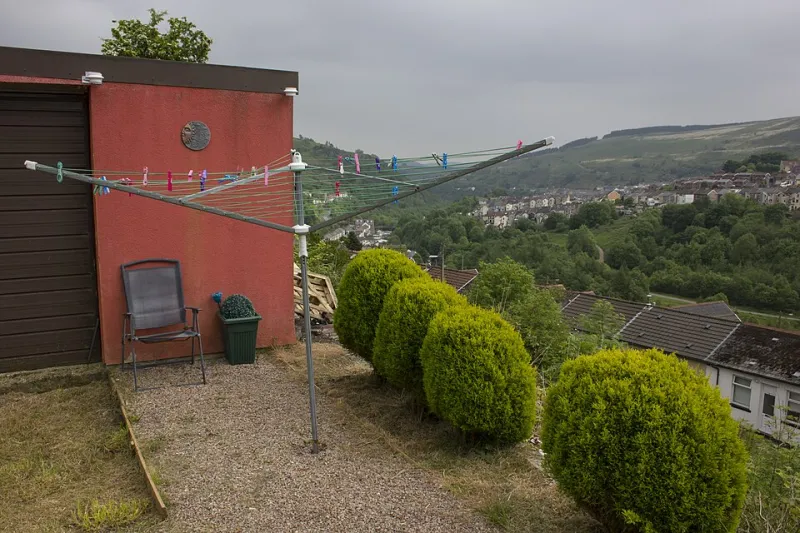
A Chair's Worth of Space: The Single Seat That Makes a Small Garden Read Properly
Photo: A. Currie & Company.; Henry G. Gilbert Nursery and Seed Trade Catalog Collection., Public domain, via Wikimedia Commons
There's a moment in every small garden where the planting is finally doing its job and yet nobody ever goes outside. The border looks lovely from the sink. The pots are healthy. And the garden, for all its effort, is something you look at rather than something you sit in. Nine times out of ten the missing piece isn't more plants. It's a destination.
One seat will do it. Not a suite, not a set of four with a matching table that eats a third of the patio — one chair, or one bench, placed with the sort of care you'd normally spend on a shrub. The chair is cheaper than the shrub, and it will change how you use the space more than anything you could plant.
Start at the window, not the door
Before you carry anything outside, stand where you actually look from. The kitchen sink, the landing, the chair by the back door where you pull your boots on. Those are the real viewpoints of a small garden, and they get more use than the garden itself.
What you want is a sightline that runs from one of those windows to a place a person could plausibly sit. If you can see the seat from indoors, you'll notice it's empty. If you can see it framed by a gap in the planting — a bit of wall behind it, a shrub leaning over one shoulder — you'll find yourself wanting to fill it. That's the whole mechanism. A seat you can see from inside the house is a seat that gets used; one tucked round a corner and out of sight is a nice idea that quietly rots.
So the first question isn't where does the sun fall or where does the view open up. It's: from which window would I like to see somebody sitting?
Give the seat a back
A bench floating in the middle of a lawn is a lonely object. Almost every seat that feels right in a cottage garden has something behind it — a wall, a hedge, the warm flank of a shed, an arbour, even a deep drift of taller perennials. The back does three jobs at once. It stops the eye, which makes the garden feel like a room rather than a corridor. It blocks wind, which matters far more to comfort in a British garden than temperature does. And it gives the planting something to spill out of.
If you're stuck for a boundary to sit against, consider the seat as the boundary itself. A bench set across the end of a narrow plot divides the long strip into two rooms, and suddenly a garden that felt like a passage has a far end worth walking to. Ten minutes of shifting a bench will tell you whether the geometry works, and it costs nothing.
Distance is the trick nobody mentions
Pull the chair too close to the border and you're sitting in a hedge, eye-level with soil, with the plants crowding your knees. Push it too far back and you're watching the border from across a room, which is what the window already does for free.
Aim for a metre or so of clear ground between the seat and the front of the planting — enough that the border occupies your whole field of view when you sit down, but not so little that you're parting stems to get comfortable. A path passing in front of the seat is ideal: it gives the feet something to rest on, keeps the chair legs out of the mud, and means the seat is on the way somewhere rather than marooned.
Angle it. A seat set square to a wall stares at its own reflection. Turned forty-five degrees to the border, it looks down the diagonal of the garden — the longest line available in a small plot, and usually the most flattering.
The November test
Here's the useful part. In November the sun sits low and the whole garden is a study in what's actually usable. Take an afternoon, note where the light lands and for how long, and then check for the two things that will ruin a seat in winter: drips and draughts.
Drips come from above — a tree canopy, a gutter, the eaves of a shed, the sagging branch of an apple. Nobody sits under a drip twice. Draughts come from the side, usually through the gap between a fence and a shed, or down the passage beside the house. Walk the garden on a windy day and you'll find the still pockets; they're almost never where you assumed, and they're worth more than an hour of sunshine.
A seat that catches a low winter sun and sits out of the wind will be used in February. A seat in blazing June sun with a cold draught at ankle height will be used in June and abandoned by September.
Plant for the shoulders, not the knees
Once the chair is in place, the planting around it becomes a different exercise. You're no longer filling a border; you're furnishing a place where a person will sit with their hands in their lap and their nose about a metre off the ground.
That means scent at sitting height — a jasmine over the back of the bench, a clump of dianthus at the armrest, lavender close enough to brush. It means nothing thorny within reach of a bare forearm. It means no plant that flops onto the seat after rain, so avoid the soft grey things that collapse at the first downpour unless they've got support.
And it means leaving a deliberate gap. Cottage gardens are generous to a fault, and the temptation is to keep filling. Resist around the chair. A plant crowding the seat looks abundant from the path and unbearable from the seat itself.
One more thing: keep it movable
Choose something you can lift on your own. A heavy bench, beautifully made, is a fixture — and fixtures in small gardens tend to end up in the wrong place. A light wooden chair or a folding metal seat can be shifted into the shade in July and turned to face the last of the light in November. Two useful positions beat one perfect one.
Cushions live indoors. A covered store near the back door, or a plastic box that doesn't mind the damp, will extend the life of the thing by years. Wooden seats want an annual going-over; metal wants a look at the paint before winter. That's it. That's the whole maintenance regime.
Small gardens don't fail for lack of plants. They fail for lack of reasons. Give yours one chair in the right place — visible from the house, backed by something solid, out of the drip and the draught, angled down the long diagonal — and the rest of the design starts to make sense around it.