Trodden Ground: Why the Floor of a Cottage Garden Does Half the Work
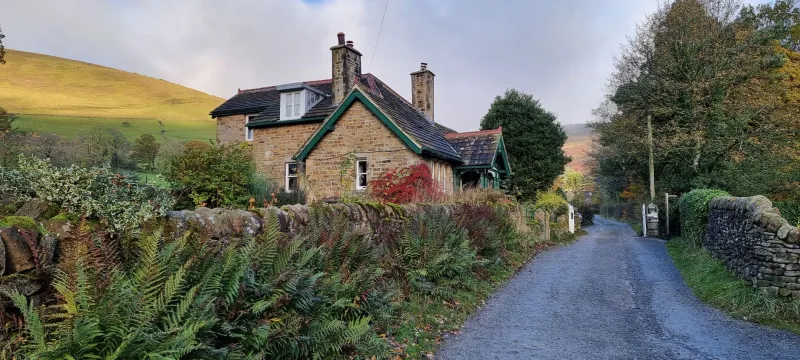
There is a moment in every small garden when you stand at the back door with a mug of something and realise that you have spent three years looking at the borders and almost no time at all looking down. The beds have been fussed over, the pots have been replanted twice, and the bit between them is a sort of grey compromise — half grass, half mud, with a worn track where the bin gets dragged.
The floor of a garden is the largest single surface in it. It is also the one your feet meet every day, the one that takes the light and throws it back up at the planting, and the one that decides whether a plot feels generous or cramped before a single flower has opened. Cottage gardens are supposed to look as though they grew there by accident. The ground they grow out of rarely is.
Start with the line you actually walk
Before choosing a material, watch yourself for a week. There will be a route from the door to the shed, a spur to the bin, a cut across to the greenhouse, and it will almost certainly not be the elegant curve you had in mind. Design that line first. A path that admits where people really walk makes everything around it feel calm and considered, because nobody is subconsciously dodging a flowerbed to get to the water butt.
Everything that is not that line can then be soft — lawn, mulch, ground cover, whatever suits the light. Paths are structure. Beds are decoration. Getting those two the wrong way round is what makes a small garden feel busy without feeling full.
Gravel: the least expensive way to look established
Pea gravel or a self-binding grit is the cottage garden floor par excellence. Ten to twenty millimetres is the usual choice; anything finer migrates into the house on your shoes, anything chunkier is unpleasant to walk on in thin soles. It is cheap by the tonne, forgiving of a wonky sub-base, and it drains, which matters more in a British winter than most of us care to admit.
The catch is edging. Gravel without an edge is gravel that ends up in the borders, closely followed by soil in the gravel. A steel strip, a row of bricks set on edge, or a low clipped hedge will all hold the line; pick one and commit.
Gravel is also, quietly, the best self-seeding surface going. Nigella, verbena, alchemilla and a fair amount of foxglove will all sow themselves into it and look entirely as though you planned it. That looseness is worth more to a cottage garden than any amount of neat membrane. If you want a surface that stays truly bare, gravel will fight you. If you want one that gradually furnishes itself, it is unbeatable.
Brick and clay: warmth underfoot
Reclaimed brick is the material I would choose if I could only choose one. Set in a simple stretcher bond, or herringbone if you are feeling confident, it brings a colour that no gravel or paving slab can match — and on a north-facing plot that borrowed warmth is not a small thing. A brick pad by the back door, with the rest of the garden in gravel or grass, is a very good use of a modest budget.
Salvage yards sell bricks by the crate and it is worth asking for frost-resistant stock, because soft commons will crumble after a few wet winters. They are also easy to lift and reset, which matters if you ever need to get a spade into the ground beneath them.
Grass, or something that behaves like it
Lawn is not the enemy, but it is a commitment. In a small plot, one shape is plenty — a rectangle or a generous circle the mower can follow without three-point turns. Two shapes, or a shape with a tight concave curve, will cost you every Saturday of the summer.
Where grass struggles — dry shade, heavy clay, a strip two metres wide between fence and path — the honest answer is often to stop calling it lawn and plant something else. Camomile and thyme need sun and sharp drainage. Clover is tougher than it looks and feeds the soil. Moss is free, and in a damp corner of a British garden, perfectly handsome if you stop fighting it.
Mulch counts as a floor
Bark chip, leaf mould, composted fines — these are surfaces too, and they change how a garden reads. Dark floors recede. They make a border feel deeper than it is, and they set off pale flowers beautifully. Pale gravel does the opposite: it pushes the boundary out and makes a small plot feel wider, at the cost of a certain glare in midsummer.
A change of floor at a threshold is one of the oldest tricks in garden design, and it works just as well at the end of a path as it does at a front door. You do not need a wall to make a room.
Stepping stones, set properly
Loosely spaced stones through grass or gravel give you the pleasure of a path without the cost of one. Set them at your natural stride — roughly 600 to 700 millimetres between centres — and sink them so they finish flush with the ground rather than proud of it, or the mower will find them and you will find the mower in the border.
Leave the gaps wide enough for thyme or mind-your-own-business to creep through, and resist the urge to make the spacing perfectly regular. A slight irregularity is what stops them reading as a building site.
What to do with the last of the year
November is a good month for ground work, because the planting has stopped shouting. Order gravel now while the merchants are quiet. Lift and stack any bricks you have been tripping over since spring. Spread leaf mould over bare beds and let the worms do the incorporating. Don't lay turf into a frost, and if you are setting stones, get them in before the ground closes up.
Then, in February, when the first hellebore opens, you will notice something. The garden will look deliberate in a way it didn't before — not because you bought more plants, but because the ground finally agrees with them.