Pots With a Passport: Cottage Charm for Rented Homes
Photo: UK rented courtyard garden with cottage style pots, lavender and obelisk, terracotta containers on patio, via www.pdffiller.com
There is a particular kind of heartbreak that comes from scrolling through garden inspiration when you rent. Every beautiful border assumes you can dig. Every rose arch assumes you can drill. Every clever wall bracket assumes a landlord who says yes to holes in the brickwork. The good news is that cottage gardening is less about ownership and more about layering: pots within pots, scent by the door, something tall at the boundary, something trailing over an edge. None of that needs a deed to the land.
A moveable cottage garden is not a compromise garden. It is a garden with a passport. Everything sits above the soil, everything can be lifted, trolleyed or split, and nothing needs permission. Here is how to make it feel generous rather than temporary.
Start with the rules you actually have
Before you buy a single pot, read the tenancy agreement properly. Most standard UK assured shorthold tenancies allow container gardening on a patio or in a yard, but some are oddly specific about what counts as a structure. Freestanding pots, troughs, window boxes that clamp on rather than screw in, and obelisks that sit in a weighted base are almost always fine. Anything fixed to a wall is a conversation. If you are unsure, ask the letting agent in writing and keep the reply. It is deeply unglamorous, but it saves a deposit dispute later.
The other constraint is weight. A large terracotta pot filled with compost is heavy, and if you are on the first floor with a balcony, or planning to move in eighteen months, you need to think about how it will travel. Lightweight composite pots, fabric grow bags for annuals, and a couple of decent pot trolleys are worth the investment. So is a simple rule: many medium pots beat one enormous one.
Zone by zone, from the door outwards
The threshold
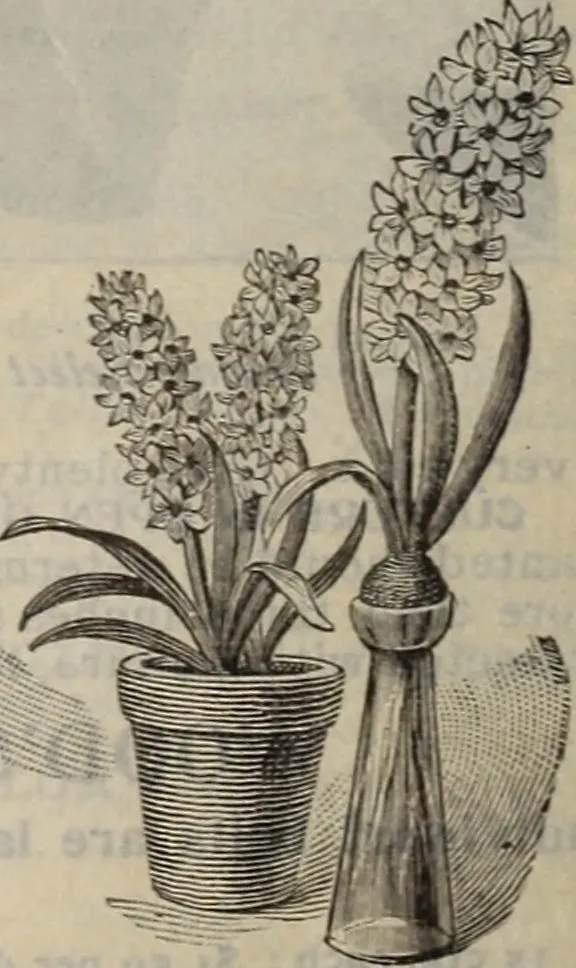
The front door is where cottage gardening earns its keep. A pair of matching pots either side, planted with something evergreen and something scented, gives structure without blocking the path. In a rental, this is also the zone most likely to be seen by a landlord, so keep it tidy at the edges. Spring bulbs in layers, then a summer swap to salvias or pelargoniums, then back to ivy and skimmia for winter. If you have a ledge, a clamp-on window box of herbs and trailing nasturtiums adds the kind of informal spill that cottage gardens do so well.
The patio floor
This is your main border, just horizontal. Group pots in odd numbers and vary the heights: a tall obelisk with a climbing rose or sweet pea, a mid-height pot of lavender, a low bowl of alpines or herbs. Push them together so the foliage touches. Cottage gardening is about density, and pots that sit apart look like a collection rather than a garden. A gravel tray beneath the pots catches drips, hides the plastic saucer, and makes the whole thing look intentional.
The shady side return
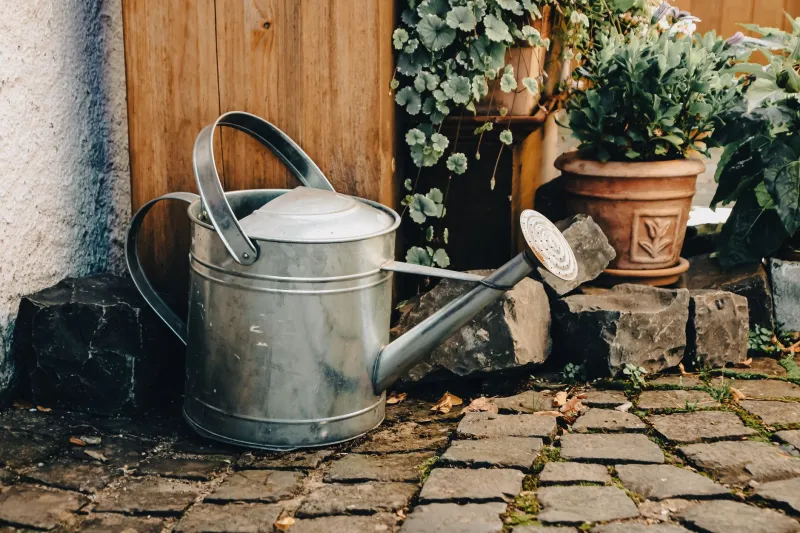
Rented homes often come with a north-facing strip of concrete that nobody knows what to do with. This is where ferns, hostas, heucheras and woodland bulbs earn their place. Use tall, narrow pots to break up the corridor and a mirror or light-coloured gravel to bounce what little light there is. If the ground is solid and the landlord will not allow a water butt, a couple of large watering cans kept full under a tap are the practical answer. Shade gardens in pots dry out more slowly, which is one small mercy.
The vertical edge
You cannot fix trellis to a rented wall, but you can put an obelisk in a pot, or lean a freestanding panel against the fence and weight the base. Sweet peas, morning glory, small clematis and climbing nasturtiums will all scramble up a movable frame. This is how you get height and romance without a single screw. Just remember that anything tall in a pot is top-heavy in wind, so choose a heavy base and keep it out of the worst of the gusts.
The windowsill and ledge
Even a flat with no outdoor space can have a cottage-garden moment. A windowsill of herbs, a small scented pelargonium and a pot of trailing ivy gives you the same layered, slightly unruly feel at eye level. In a rented flat, this is often the only place to grow, so treat it seriously: use saucers, choose compact varieties, and rotate the pots so they do not lean permanently towards the glass.
Plants worth investing in
You want plants that earn their keep across more than one season, because moving day is easier with fewer, better pots. A repeat-flowering shrub rose in a large pot is the closest thing to a cottage-garden signature, provided you choose a compact variety and keep it fed. Lavender gives scent and structure, though it needs sharp drainage and a sunny spot. Salvia and nepeta are generous and forgiving, and both can be split when you move. Herbs, especially rosemary, thyme and mint, cover the edible angle and look right in a gravel-topped pot.
For shade, a fern and a hosta in matching pots will do more for a dark corner than any amount of paint. Bulbs are the secret weapon of the moveable garden: layer them in pots in autumn, and you can take the whole spring display with you. Add a small apple or pear in a pot only if you are staying put for a few years, and be honest about the watering.
The moving-day plan
A month before you move, stop planting anything new. Start grouping pots by weight and by how much they will resent being shifted. Large shrubs can be root-pruned gently and repotted into slightly smaller pots for transport, but do it in early autumn rather than midsummer. Take cuttings of anything you love, because a jam jar of rooted cuttings travels better than a heavy pot ever will. Label everything, take photographs of the groupings so you can reassemble them, and accept that some annuals will not make the journey. They were always temporary.
The point of a moveable cottage garden is not to pretend you own the place. It is to make the place feel like yours for as long as you are there. Pots, troughs and obelisks can be lifted, rearranged and taken with you. The romance, it turns out, is entirely portable.