Scent Before the Door Opens: A Winter Fragrance Route Through Porch and Hall
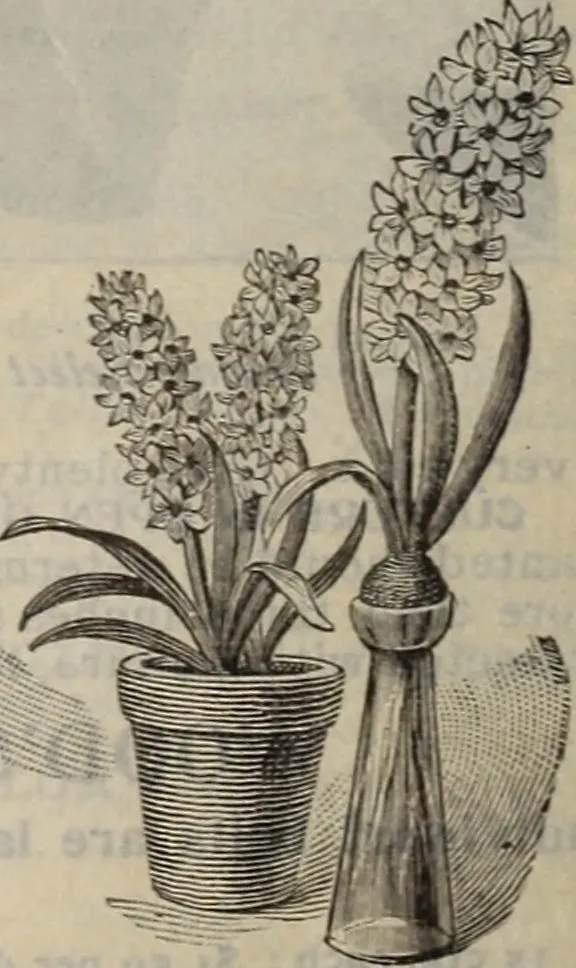
Photo: Internet Archive Book Images, No restrictions, via Wikimedia Commons
In winter the front of the house takes over from the back. You come home in the dark with cold fingers and a bag of shopping, and everything that greets you — the pot by the step, the smell in the porch, the bowl on the hall table — is doing the work a summer border would do in June. Cottage gardeners tend to pour their energy into the back garden and leave the entrance to a doormat and a dying fern. It is worth rebalancing.
Think of the front of the house as a route rather than a display. Scent should begin at the gate, strengthen at the door, and soften once you are inside.
Fragrance follows cold, damp air
The first practical point is that winter scent does not travel. Cold air is dense, wet air flattens it, and a plant that perfumes a whole garden in May will barely reach the path in January. Everything scented needs to sit within arm's reach of where a person actually walks — gate hinge, step, path edge, doorway. Position is worth more than quantity, and three well-placed plants will beat a row of ten.
Stop one: the gate
Sarcococca confusa, Christmas box, is the reliable starting point: insignificant white flowers from January, and a honeyed scent you notice before you see the plant. It tolerates dry shade, which makes it useful under a hedge or in a pot in a north-facing front garden, and it stays neat without clipping.
If there is a corner you pass on the way to the bin, that is the spot for Viburnum x bodnantense 'Dawn', whose pink flowers open and reopen right through the coldest weeks. It wants a bit of room, so it suits a small front garden better than a doorstep pot.
Stop two: the wall and the step
Winter honeysuckle, Lonicera fragrantissima, is the one to train against the house wall beside the door. Grown this way its scent sits at nose height rather than above your head, and a single stem brushed in passing will follow you inside. It is unfussy, flowers on and off from December, and can be cut back hard after flowering.
At the step itself, rosemary earns its place twice over — evergreen structure plus the sharp, clean smell released when you brush past it. A bay in a pot does the same job for foliage. Daphne odora is the indulgence: expensive, fussy about drainage, and capable of sulking for a year, but for three weeks in February its perfume justifies every penny. Plant it in a pot of gritty compost raised on feet so British winter rain drains straight through.
Witch hazel is worth mentioning only if you have genuine space. Hamamelis mollis is a shrub, not a doorstep plant, and its scent is faint unless you stand right beside it — so plant it where you will linger, not where you will stride past.
Inside: forcing bulbs without a greenhouse
This is where the hallway earns its keep. Prepared hyacinths, bought in September and potted by early October, will flower from Christmas onwards if you give them eight to ten weeks of cool darkness and then a cool, light room. Bulb fibre in a bowl, noses just showing, then a cold cupboard or a garage windowsill, then out into the light. Do three bowls a fortnight apart and you have scent from December to March rather than a fortnight of overwhelm.
Paperwhites in a bowl of gravel and water are quicker and cheaper, though the scent divides households — grassy and slightly medicinal to some noses. Muscari forced in a glass vase of water in a dark cupboard are milder and neater. Iris reticulata in a pot of grit give a violet, powdery perfume out of all proportion to their size.
The hallway problem
Small halls amplify. One bowl of hyacinths will scent an entire terraced hallway; three will make visitors wonder if something has gone off. Keep to one scented bowl at a time, top it up with mild company such as cyclamen or small ivies, and site it away from the coat rack — wool holds fragrance and will smell of hyacinth for a fortnight. Keep bowls off radiators, check the fibre rather than watering on habit, and watch for mould on the compost surface in a closed, humid hall.
It also helps to remove the competition. A scented candle next to a bowl of hyacinths, with a plug-in in the hall, is three perfumes arguing in a small space. Choose one and let it win.
The front windowsill
Treat the windowsill as the transition zone between outdoors and in. Hyacinth glasses showing roots in water look wonderful from the street as well as from the sofa, and the cold glass slows growth so flowers last longer. A pot of muscari or a small cyclamen sits happily there through February. Outside the same window, a simple box of wintergreen, skimmia and a few pansies keeps the house looking inhabited from the pavement.
Keeping the welcome going until March
Roughly, the sequence runs like this: November brings the first viburnum and the earliest forced hyacinths; December belongs to paperwhites and bowls in the hall; January is sarcococca and winter honeysuckle at the door; February gives daphne, witch hazel and muscari; March hands back to the garden with hyacinths in pots outside and the first tulips.
Check pots for waterlogging after every wet spell and raise them on feet. Deadhead as flowers fade, feed nothing until spring. And when the muscari finish, don't leave a bowl of bare compost by the door — swap in a pot of box or a jug of bay and eucalyptus, so the route never breaks.
A good winter welcome is not one heroic plant. It is a short, deliberate sequence of small scents, arranged so the house smells of something before the door is even open.